
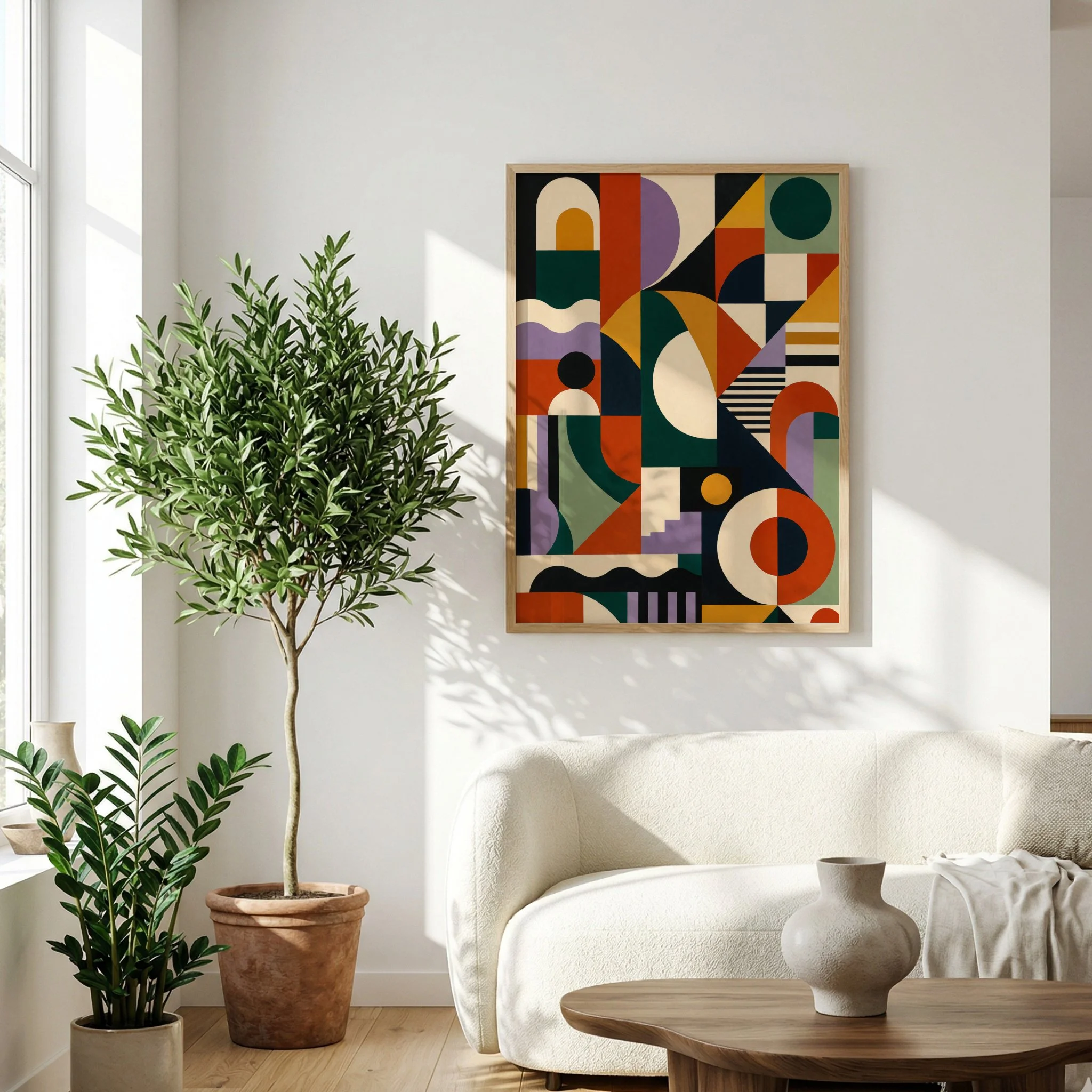
Why Abstract Art Isn’t Just Something You Look At
Most people think of art as decoration.
But abstract art works differently. It doesn’t just sit on your wall—it subtly influences how you feel, think, and focus every day.
Artists like Wassily Kandinsky believed colors and forms could directly affect the human mind, while Mark Rothko designed paintings to create deep emotional experiences.
When you own abstract art, you’re not just buying a visual—you’re shaping your environment.
1. You Experience a Better Mood—Without Trying
Your brain constantly reacts to your surroundings, even when you’re not paying attention.
Abstract art:
Softens harsh environments
Adds emotional depth to a space
Creates subtle visual stimulation
Instead of staring at blank walls or generic decor, you’re engaging with something that evokes feeling.
Over time, that leads to:
- A calmer baseline mood
- Less visual boredom
- A more uplifting atmosphere
2. Your Focus Improves Naturally
Focus isn’t just about discipline—it’s about environment.
Abstract art helps by:
Giving your brain something gentle to rest on
Reducing mental clutter from overly busy visuals
Encouraging a “flow state” through pattern and rhythm
This is especially powerful in workspaces.
Instead of distractions, you get controlled stimulation—which keeps your mind engaged without overwhelming it.
3. You Feel More Mentally Grounded at Home
Your home should reset your mind—not drain it.
The right abstract piece can:
Create a sense of calm when you walk in
Help you decompress after work
Make your space feel intentional instead of random
This is why more people are turning their homes into wellness environments, not just living spaces.
4. You Build a Personal Emotional Connection
Unlike literal art, abstract pieces don’t lock you into one meaning.
That means:
Your interpretation evolves over time
Your emotional connection deepens
The artwork becomes yours in a personal way
What you see today might feel different next month—and that’s where the value grows.
5. Your Environment Starts Working For You
Most people underestimate how much their surroundings affect them.
Owning abstract art means:
Your walls aren’t passive—they’re active influences
Your space reflects intention, not randomness
Your environment supports your mindset daily
This is the difference between decorating a room and designing how you feel in it.
How to Choose Abstract Art That Actually Improves Your Mood
Don’t overcomplicate it—focus on impact:
1. Trust your first reaction
If it makes you pause, it’s doing something right.
2. Match your goal
Calm → soft tones, flowing shapes
Energy → bold colors, contrast
Focus → minimal, structured compositions
3. Place it where you’ll see it daily
The benefit comes from repetition, not occasional viewing.
Why This Matters More Than You Think
You don’t experience your home once—you experience it every day.
That means small environmental changes create compounding effects:
Better mood → better decisions
Better focus → higher productivity
Better space → better overall quality of life
Abstract art becomes part of that loop.
Upgrade Your Space, Upgrade Your Mind
If something on your wall can:
Lift your mood
Improve your focus
Make your space feel intentional
…it’s not just decoration.
It’s a daily advantage.
👉 Choose a piece that resonates with you
👉 Place it where it influences your routine
👉 Let your environment start working in your favor
Because the right abstract art doesn’t just change your wall—
it changes how you experience your day.